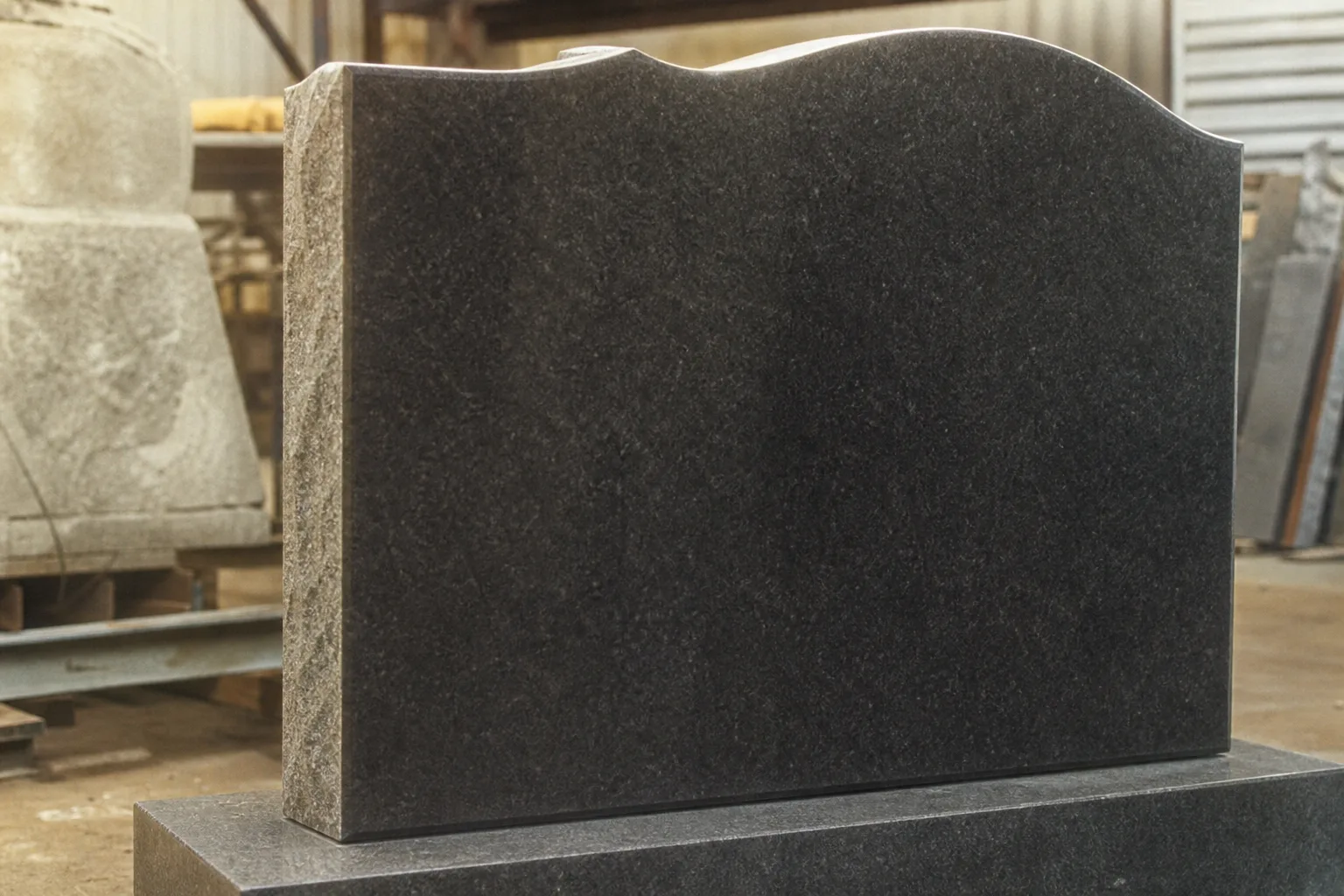
Every monument decision sits inside the one before it, and the cost of changing your mind climbs steeply as you move down the chain. A family that picks a stone color before checking the section rules may find the color is not permitted and lose a deposit. A family that approves a design before confirming a middle initial pays for a recut. The sequence below is the one most monument dealers work in anyway, but they rarely explain why, and the why is money. Decide in this order and almost every reversal is free.
The cemetery's rules come before anything you like
Before you look at a single stone, get the written regulations for the specific section where the grave is, not the cemetery's general brochure, because sections within one property routinely carry different restrictions on height, thickness, base width, material, and whether an upright is allowed at all. Ask for the setting fee and the foundation charge in the same conversation, since those are paid to the cemetery rather than the dealer and rarely appear on a monument quote. Ask who may perform the installation. Some grounds require their own crew. Getting this page in hand costs nothing and eliminates the single most expensive reversal there is, which is a finished stone that cannot be set.
Type and size, then material, then color
The next decision is form: flat marker, bevel, slant, or upright with a separate base, because that choice sets the volume of stone and therefore the largest single number on the quote. Only after the form is fixed does material make sense to discuss, and in practice the field narrows fast to granite in a handful of quarry colors, with bronze on a granite base as the common alternative where a section requires a flush marker. Color comes last inside this step. Reversing a color choice before the stone is cut usually costs nothing beyond a price difference between quarries; reversing it after the blank has been ordered and sawn can mean forfeiting the material entirely, since a cut blank sized to your dimensions is not easily resold.
Names, dates, and spelling before design
Fix the exact text before anyone draws anything. That means the full legal name as the family wants it carved, including middle names or initials, the birth and death dates in the format you want, and any surname spelling that differs from what appears on the death certificate. Confirm it against a document rather than memory, and have a second family member read it aloud. Text changes on a working proof are ordinarily free or close to it. The same change after sandblasting is not a change at all but a repair, and repairs to carved granite involve either filling and recutting, which is visible, or replacing the panel or the stone, which is a new purchase with a new setting fee attached.
Design, ornament, and the things that are added later
With text locked, design becomes a set of decisions you can genuinely reverse: lettering style, whether the inscription is sandblasted or laser-etched, borders, a carved emblem, a portrait panel, a vase. Dealers who carry a broad range of headstones will show you these as options on a proof, and the proof is the last cheap moment in the whole project. Read it as a legal document, because that is what it is. The Federal Trade Commission oversees trade practices in the sale of funeral goods and services, and the practical protection for a monument buyer is a written order that states material, finish, dimensions, exact inscription, and who pays the setting fee, signed by both parties.
One design decision deserves separate thought. If the marker will eventually carry a second death date for a surviving spouse, the layout has to leave room for it, and the later date is usually cut in the cemetery rather than the shop, at a price that includes a travel charge. Ask what that second inscription will cost now, while you still have leverage, and get the figure written on the order.
What each reversal actually costs
The shape of the numbers matters more than any single figure, since regional pricing varies widely. Backing out before the stone is ordered generally costs you a portion of the deposit or nothing at all. Backing out after the blank is cut to size costs the material, which on an upright with a base is a substantial share of the total. Changing the inscription after blasting costs a new stone in most cases. Changing your mind after the monument is set adds a removal charge, a second setting fee, and often a new foundation, because the old one was poured to the old footprint. There is no penalty at all for spending an extra week at the proof stage, and that week is where the savings live.
Work the order deliberately and the project becomes a series of decisions you can still undo, right up until the proof is signed. Families who rush the first three steps and linger over the fourth end up paying for the same stone twice, while families who do the opposite generally pay once and get the marker they meant to order.